Engineer Design Notebook KDP Interior: A Practical Evaluation for Self-Publishers
If you are exploring the world of Amazon KDP publishing, you have likely encountered pre-made interior templates designed to simplify the production process. One such option is the Engineer Design Notebook KDP Interior, a ready-to-use layout package intended for those creating engineering-themed notebooks, logbooks, or journals. This article provides a balanced, practical evaluation of this interior product, helping you decide whether it aligns with your publishing goals, workflow, and audience needs.
What the Engineer Design Notebook KDP Interior Offers
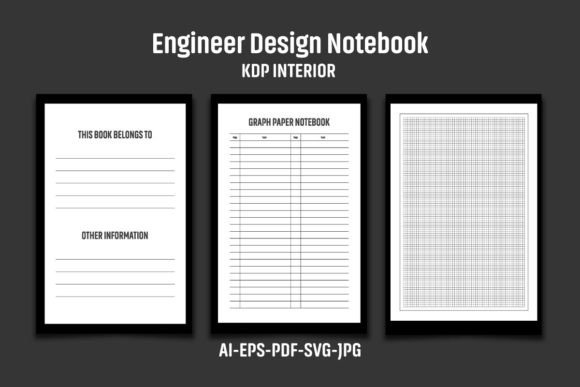
The Engineer Design Notebook KDP Interior is a digital asset package that includes a complete notebook interior formatted for Amazon's paperback publishing requirements. The package contains multiple file formats: one AI file, one EPS file, one PDF file, three JPG files, and one SVG file. The interior dimensions are 8.5 by 11 inches with bleed, resulting in an overall PDF page size of 8.62 by 11.25 inches. It provides 120 pages at 300 DPI resolution in black and white, and the files are compatible with Adobe Illustrator and EPS CS6 versions.
Importantly, the files come compressed in a single ZIP archive, requiring extraction with software such as WinZIP, WinRAR, or similar utilities. The product is intended as a base interior that you must customize before uploading—specifically, you need to add your own logo or graphic to each interior page to avoid duplicate content flags on Amazon KDP.
Why You Might Consider This Interior
Understanding your motivation for evaluating this product helps frame the decision. Several common scenarios lead self-publishers to look at pre-made interiors like this one.
Time Efficiency and Workflow Simplification
Creating a notebook interior from scratch requires design software skills, knowledge of KDP formatting specifications, and a significant time investment. For publishers who want to release multiple titles or enter the engineering notebook niche quickly, a pre-made interior reduces the setup phase. The Engineer Design Notebook KDP Interior provides a structured grid layout suitable for engineering notes, calculations, sketches, and technical diagrams, which you might otherwise spend hours building yourself.
Consistency Across a Product Line
If you plan to publish a series of engineering notebooks, having a uniform interior layout across all titles can strengthen your brand identity. This interior package gives you a consistent base that you can modify with different cover designs or minor variations, helping you maintain visual coherence in your catalog.
Access for Non-Designers
Not every self-publisher has graphic design experience. For those who are comfortable with basic file handling but lack advanced layout skills, pre-made interiors offer a way to produce a professional-looking notebook without learning complex design tools. The inclusion of layered AI and EPS files means you can make simple modifications such as adjusting page numbering, changing header placement, or altering margin widths.
Benefits of Using a Pre-Made Engineer Notebook Interior
When evaluating any pre-made interior, it helps to weigh the practical advantages against the potential drawbacks.
Format-Ready for KDP
The interior is sized specifically for Amazon KDP's paperback requirements, including bleed margins. This reduces the risk of formatting errors that could lead to rejected uploads or poor print quality. The 300 DPI resolution ensures crisp text and grid lines when printed, which matters for a notebook where users will write and draw in fine detail.
Multiple File Formats Increase Flexibility
Having the interior available in AI, EPS, PDF, JPG, and SVG formats gives you options depending on your workflow. You can edit the native AI or EPS files in vector software, use the PDF for direct upload after customization, or repurpose the SVG for other digital applications. The three JPG files may serve as preview images or for testing layouts quickly.
Black and White Interior Keeps Printing Costs Low
For a notebook intended for handwritten notes and sketches, black and white printing is standard. This interior's monochrome design keeps per-unit printing costs lower than color interiors, which is important if you plan to price competitively or sell in volume.
Scalable Vector Files Allow Size Adjustments
The AI and EPS files are vector-based, meaning you can resize elements without losing quality. If you later decide to adapt the interior for a different trim size or for a digital version, having vector source files makes those adjustments feasible without recreating the layout from scratch.
Tradeoffs and Considerations You Should Know
While pre-made interiors offer convenience, they also come with limitations that may affect your publishing experience and final product quality.
Duplication Risk and Amazon Policy
Because the same interior template is sold to multiple buyers, there is a real risk that your notebook could be flagged for duplicate content if you do not customize it sufficiently. The product notes explicitly state that you must add your own logo or graphic to each interior page before uploading. This is not optional—it is a necessary step to avoid having your listing blocked or removed. Even with a logo, the underlying layout may still be identical to other publishers' notebooks, so consider adding additional unique elements such as a custom header, footer, or page number style.
Limited Uniqueness in a Crowded Niche
The engineering notebook category on Amazon already contains many similar products. Using a widely available template means your book may look very much like others in search results. If differentiation is important to your brand strategy, you may need to invest additional effort in cover design, interior modifications, or content additions such as reference pages, conversion tables, or project planning sheets.
Design Flexibility Is Bounded by the Template
Even with layered AI and EPS files, you are working within the original template's structure. Significant changes—such as completely reorganizing the page layout, adding complex graphic elements, or altering the grid style—may require design skills beyond simple editing. If you envision a notebook with a unique layout, you might be better served by creating a custom interior from scratch.
File Handling and Software Requirements
To edit the AI and EPS files, you need vector editing software such as Adobe Illustrator or a compatible alternative like Affinity Designer or Inkscape. The PDF file can be edited with PDF software, but making substantial changes to the layout is more challenging. If you lack access to these tools, your ability to customize the interior will be limited to adding text overlays or graphics in a basic image editor, which may not yield professional-looking results.
When This Interior Is a Strong Fit
Certain situations make the Engineer Design Notebook KDP Interior a practical choice.
You Are New to KDP Publishing
If you are just starting your KDP journey and want to test the engineering notebook niche without a large upfront investment of time or money, this interior provides a low-risk entry point. The low cost relative to custom design work allows you to create a listing quickly and gauge market demand before committing to more elaborate projects.
You Need a Quick Launch for a Specific Event or Promotion
If you need to publish a notebook by a certain date—for example, to coincide with an engineering conference, a back-to-school season, or a promotional campaign—a pre-made interior can accelerate your production timeline. By eliminating the design phase, you can focus on cover creation, listing optimization, and marketing.
You Plan to Use the Interior as a Base for Multiple Variations
If your strategy involves releasing several engineer notebooks with different covers but identical interiors, this template gives you a repeatable format. You can produce a series of notebooks—such as "Electrical Engineering Notebook," "Mechanical Engineering Notebook," "Civil Engineering Notebook"—by changing only the cover and title while keeping the same interior layout. This approach can build a cohesive product line efficiently.
When Alternatives May Be Worth Considering
There are scenarios where a pre-made interior may not serve your goals well, and exploring other options makes sense.
You Prioritize Originality and Brand Distinctiveness
If your publishing brand is built on unique design and you want every product to stand out clearly from competitors, a widely available template may work against you. In this case, commissioning a custom interior from a graphic designer or learning to create your own layouts with software like Adobe InDesign or Canva could be a better long-term investment. Custom interiors allow you to incorporate unique grid patterns, branding elements, and content that reflects your specific audience's needs.
You Plan to Sell in High Volume or Build a Premium Brand
For high-volume publishing or premium-priced notebooks, the quality and distinctiveness of the interior become more important. Customers who pay a higher price expect a polished, original product. A template-based interior might feel generic to discerning buyers. If your target audience includes professionals who use engineer notebooks for patent documentation, research logs, or project management, they may value unique features such as numbered pages, index sections, or specialized reference materials that go beyond a basic grid layout.
You Have Specific Formatting Requirements
If you need an interior with a specific page count other than 120, or if you require different grid styles on different pages, or if you want to include pre-printed content such as formula sheets, checklists, or diagram templates, a fixed pre-made interior may not accommodate these needs. In such cases, a custom layout gives you full control over every page element. Similarly, if you want to offer the notebook in multiple trim sizes, a single pre-made interior may not scale easily because page margins and grid proportions need to be adjusted for each size.
You Are Concerned About Long-Term Scalability
If you envision growing a large catalog of engineer notebooks with varied interior designs, relying on purchased templates for each product may become inefficient. Each new title would require finding and customizing a new template. Investing in creating your own reusable interior framework that you can adapt quickly for different products may be more sustainable in the long run.
Practical Insights for Making Your Decision
Evaluating the Engineer Design Notebook KDP Interior requires thinking about your own workflow, goals, and audience. Here are some decision-making points to consider.
First, assess your comfort with file handling and design software. If you can extract a ZIP file, open an AI or EPS file in a compatible program, add your logo, and export a new PDF, you have the basic skills needed to use this interior effectively. If these steps feel unfamiliar, you may need to invest time in learning them or seek help from someone with experience.
Second, consider your budget and time. The cost of this interior is typically much lower than a custom design, but remember that you are also paying for the time you spend customizing it. Calculate whether the total investment—purchase price plus your time—is less than what you would pay a designer for a unique interior. For a single notebook, the template may be more economical. For multiple notebooks, a custom framework might offer better value per title.
Third, test the market before committing to a large series. You can purchase this interior, customize it minimally, and launch one notebook to see how it performs. If sales and reviews are positive, you can then invest in more distinctive interiors for subsequent titles. If the notebook does not gain traction, your financial loss is limited to the cost of the template and your time.
Fourth, pay close attention to Amazon's duplicate content policies. Even with your logo added, there is a chance that the interior could be flagged if it is too similar to other books using the same template. To reduce this risk, modify more than just the logo—change header styles, add or remove page elements, adjust grid spacing if possible, or include unique text on certain pages. Treat the template as a starting point rather than a finished product.
Fifth, think about the end user. An engineer or engineering student using a notebook for technical work values functionality: clear grids, adequate writing space, durable paper, and maybe reference information. While the interior template provides a grid layout, you can add value by including conversion charts, unit tables, formula summaries, or project planning pages if your customization skills allow. The more useful the interior is to the buyer, the stronger your product becomes regardless of whether the layout came from a template.
Final Considerations for Your Publishing Journey
The Engineer Design Notebook KDP Interior is a practical tool for self-publishers who want to enter the engineering notebook space quickly and affordably. It offers a solid foundation that meets KDP formatting requirements and provides flexibility through multiple file formats. However, its value depends on how well it fits your specific situation. If you are a beginner or need a fast launch, it can serve as a stepping stone. If originality and long-term brand building are your priorities, you may need to look beyond templates for a more custom solution.
Understanding your own goals, resources, and risk tolerance will guide you to the right choice. By weighing the benefits of time savings and convenience against the tradeoffs of limited uniqueness and potential duplication risk, you can make an informed decision that supports your KDP publishing business effectively. Whatever path you choose, the key is to deliver a product that meets your audience's needs and stands out in a competitive marketplace.