Crossword 32: Building Profitable Puzzle Books on Amazon KDP
If you have spent any time exploring Amazon Kindle Direct Publishing, you already know that low-content and medium-content books represent one of the most accessible entry points for independent publishers. Among the most consistent performers in this space are crossword puzzle books. They appeal to a broad demographic, require no ongoing updates, and once uploaded, can generate passive income for years. But the difference between a book that sells and one that sits idle often comes down to the interior design, puzzle quality, and overall user experience. That is where Crossword 32 enters the picture as a practical, ready-to-use interior component designed specifically for Amazon KDP publishers who want to produce professional puzzle books without reinventing the grid.
What Crossword 32 Really Is
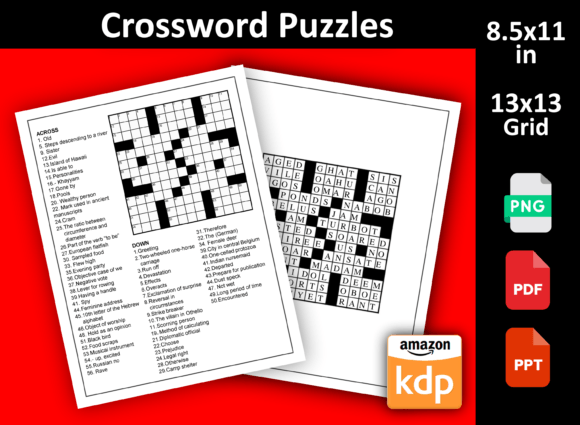
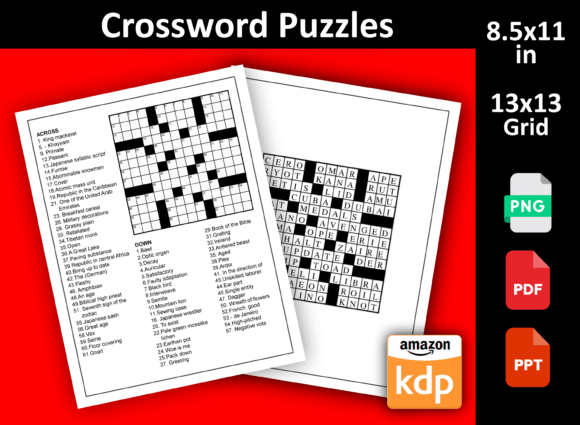
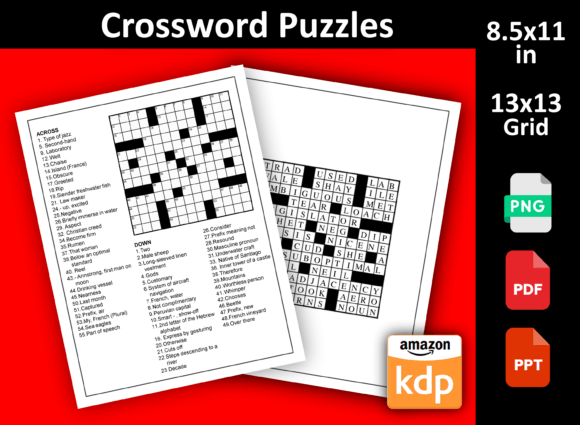
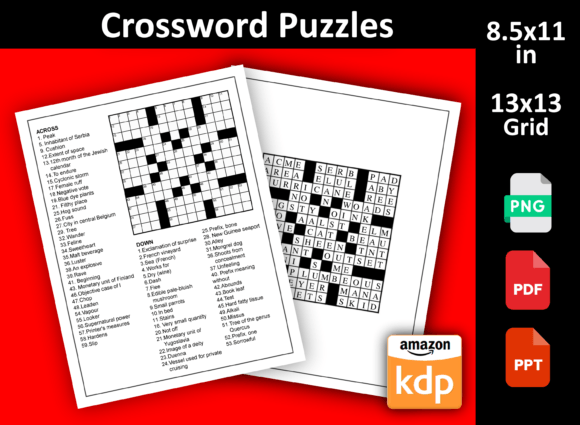
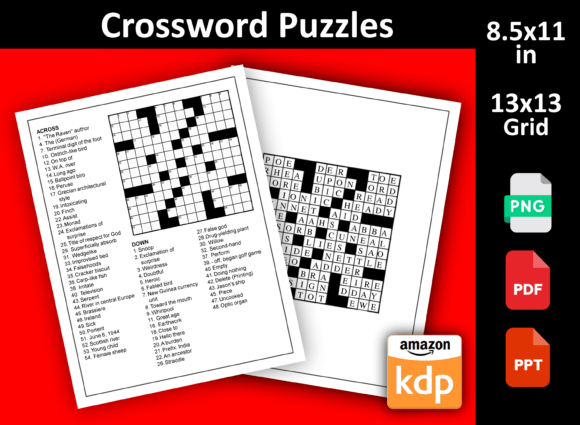
Crossword 32 is a complete interior package for a single crossword puzzle. It includes one 13x13 grid puzzle, its solution, and a set of formatted files delivered in a zip folder containing PDF, PPTX, and PNG formats. The dimensions are set to 8.5 x 11 inches with no bleed, which means it fits standard trim sizes used across KDP. The puzzle itself is classified as intermediate to hard difficulty and uses American crossword conventions. The design is unique, not a generic template, so each puzzle offers a distinct solving experience.
For a publisher, this package eliminates the time-consuming work of grid construction, clue writing, and layout formatting. Instead of starting from a blank page, you receive a finished puzzle interior that you can insert directly into your book project. The availability of multiple file formats also means you can edit, resize, or combine puzzles in ways that suit your specific workflow.
Where Crossword 32 Fits into a Publishing Workflow
Every KDP publisher develops a routine. Some outline their book structure first, then source content. Others prefer to gather puzzle interiors and build the book around them. Crossword 32 works well in both approaches, but it is most effective when you consider it as a modular building block rather than a standalone product.
Think of your puzzle book as a collection of individual puzzles. Each puzzle represents a unit of value for the solver. If you plan to publish a book with 50, 80, or 100 puzzles, then each interior package like Crossword 32 becomes one unit in that collection. The real workflow advantage is that you can mix and match puzzles from different volumes or series to create variety. You are not locked into a single style or difficulty level. You can combine intermediate grids with easier ones, or create themed collections by selecting puzzles that share certain characteristics.
This modular approach also affects how you manage your publishing schedule. Instead of designing every puzzle from scratch, you can assemble a book in a fraction of the time. That speed allows you to test different niches, price points, and cover styles without committing weeks to each project.
Practical Implementation: From Download to Live Listing
Let us walk through how Crossword 32 integrates into a typical KDP workflow. After you download the zip file, you will find three file types inside: PDF, PPTX, and PNG. Each serves a different purpose.
The PDF file is the most straightforward option. You can open it in any PDF editor or even in word processing software that supports PDF import. If you are using a tool like Adobe InDesign, Canva, or Microsoft Word to build your book interior, you can insert the PDF page directly into your document. Since the file is no-bleed and sized to 8.5 x 11 inches, it aligns perfectly with standard KDP trim sizes. You simply place it where the puzzle should appear in your book layout.
The PPTX file gives you editing flexibility. If you want to adjust colors, add branding elements, or modify the puzzle layout slightly, you can open the file in PowerPoint or Google Slides. This is particularly useful if you maintain a consistent visual style across all your puzzle books. You can apply your fonts, adjust border thickness, or add header text without rebuilding the grid.
The PNG file is ideal for quick placement or for use in visual tools that work best with image files. Some publishers prefer to build their interiors in Canva, and PNG images import easily there. You can also use the PNG for preview images, marketing materials, or social media promotion before the book even goes live.
Once you have inserted the puzzle into your book interior, you repeat the process for each additional puzzle. After arranging all puzzles and solutions in the correct order, you export your final manuscript as a PDF and upload it to KDP. The solution page is already included in the Crossword 32 package, so you do not need to create it separately. That may seem like a small detail, but when you are handling dozens of puzzles, having pre-formatted solution pages saves significant time.
Quality Control and Consistency
One concern that arises when using pre-made interiors is whether the puzzles will feel cohesive in a single book. If you mix puzzles from different sources, you might end up with grids that look visually inconsistent or have different clue styles. Crossword 32 addresses this by offering a unique but standardized design. The 13x13 grid size, American crossword conventions, and intermediate-to-hard difficulty create a consistent solving experience. When you use multiple copies of this same interior package, or combine it with other puzzles from the same series, the reader will not notice abrupt changes in layout or quality.
From a quality control perspective, you also benefit from the fact that the puzzle has already been constructed and clued. You do not need to verify grid symmetry, check for duplicate answers, or ensure that clues are fair. The design is tested and ready for publication. That does not mean you should skip proofreading entirely. Always review the puzzle and solution to confirm they match your book's page order and that no formatting errors occurred during import. But the heavy editorial work is already done.
Workflow Examples for Different Publishing Goals
How you use Crossword 32 depends on your broader strategy. Below are three realistic scenarios that illustrate different approaches.
Scenario One: Rapid Volume Publisher
You want to publish a series of crossword books quickly to build a catalog. You purchase multiple interior packages, each containing a single puzzle. You build a template in your layout software that includes a consistent cover, table of contents, and footer design. Each day, you insert a set number of puzzles into your template, generate a new book, and upload it. Within a month, you have ten or more titles live. The key is that the puzzles themselves require minimal handling. Your time goes into covers, descriptions, and keyword research rather than interior creation.
Scenario Two: Niche Themed Book
You want to publish a crossword book with a specific theme, such as history, science, or pop culture. You select puzzles that align with that theme, or you use Crossword 32 as the structural base and write your own themed clues. Because the PPTX file is editable, you can modify the clue list without touching the grid. This approach gives you the best of both worlds: a professionally laid-out grid and customized content that differentiates your book in search results.
Scenario Three: Bundled Collection
You already have one or two puzzle books on KDP, and you want to release a larger collection. You combine puzzles from your existing books with new puzzles from packages like Crossword 32. This works well for creating a "Volume 2" or "Mega Edition." Your existing audience already trusts your brand, and the new puzzles expand the value you offer. Because the interior package uses the same trim size and format, everything fits together seamlessly.
Usability Considerations for the End Reader
While the publishing workflow is important, the ultimate success of any puzzle book depends on the solver's experience. The 13x13 grid is a well-established size that offers enough challenge without becoming overwhelming. Intermediate to hard difficulty means the puzzles appeal to solvers who have moved beyond beginner levels but are not yet expert. That sweet spot captures a large portion of the crossword audience.
American crossword conventions also matter. If you publish on Amazon's US store, most of your readers will expect American-style clues and grid patterns. Grids that use British conventions or non-standard clue numbering can confuse buyers and lead to negative reviews. Crossword 32 follows American conventions, which reduces that risk.
The inclusion of a solution page is another usability factor that affects reviews. Some publishers hide solutions at the back of the book or omit them entirely. However, most solvers expect to verify their answers, especially for harder puzzles. Having a clearly formatted solution page improves the user experience and reduces frustration.
Long-Term Use and Scalability
A single puzzle interior package might seem like a small asset, but it becomes part of a scalable system when you treat it as a component. Over time, you can build a library of puzzle interiors from multiple sources. Each new package adds to your inventory of ready-to-use content. When you want to launch a new book, you simply select the puzzles you need, arrange them, and publish.
This approach also insulates you from creative burnout. Designing original puzzles is intellectually demanding. Even experienced constructors can only produce a limited number of high-quality grids per week. By using pre-made interiors, you can publish at a pace that would be impossible if you were creating every puzzle from scratch. That does not mean you should stop designing your own puzzles if you enjoy it. But for publishers who want to treat puzzle books as a business rather than a hobby, efficiency matters.
Another long-term consideration is compatibility with future projects. The 8.5 x 11 inch trim size is one of the most common for puzzle books on KDP. If you later decide to create a paperback edition, a hardcover version, or even a larger format collection, the same interior files can adapt. The no-bleed specification also simplifies reprinting and avoids common formatting errors that delay publication.
Practical Observations for New Publishers
If you are new to KDP publishing, there are a few things worth noting about how crossword interiors fit into the broader process. First, the book cover is often more important than the interior when it comes to initial clicks. Spend time creating a cover that communicates clearly what the book contains. Second, your book description should mention the number of puzzles, difficulty level, and grid size. Buyers search for those specifics. Third, consider pricing. Puzzle books generally sell well in the $6.99 to $9.99 range, but you can test higher or lower depending on the number of puzzles and the perceived value.
When you upload your manuscript to KDP, use the preview tool to check that every puzzle and solution appears correctly. Sometimes PDF conversion can shift page margins or crop content. The no-bleed format reduces these risks, but always verify before hitting publish. If you are using the PNG files, confirm that the resolution is sufficient for print. The PNGs in the Crossword 32 package are designed for this purpose, but it is good practice to check.
Finally, think about series branding. If you plan to publish multiple crossword books, use a consistent naming convention and visual style. Readers who enjoy one book in your series are more likely to buy others if they recognize the layout and quality. Using the same interior package across multiple volumes helps reinforce that consistency.
Integrating Crossword 32 into a Broader Creative or Business Workflow
While the primary use case for Crossword 32 is KDP publishing, the package can also serve other purposes. Educators and tutors might use the puzzles as supplementary materials for students. Bloggers and content creators can offer puzzles as downloadable freebies to grow their email lists. Freelancers who design custom puzzle books for clients can use the interior as a starting point and then modify it to fit client specifications. In each case, the process is similar: you receive a finished puzzle, adapt it to your format, and distribute it through your chosen channel.
For small business owners who want to add a physical product to their online store, puzzle books can be printed on demand or in small batches. The 8.5 x 11 inch trim size works with most print-on-demand services, not just KDP. If you are already selling on Etsy, Shopify, or another platform, you can repurpose the same interior files for those channels.
The key is to treat Crossword 32 not as a fixed product but as a flexible resource. The work of grid construction and formatting is done. Your job is to decide where and how it fits into your specific workflow, whether that means publishing a single book, building a series, or creating supplementary materials for a larger project.
Final Thoughts on Process and Execution
Publishing puzzle books on Amazon KDP is a process that rewards preparation and consistency. The publishers who succeed are not necessarily the ones who create the most original puzzles. They are the ones who understand how to assemble, format, and market their books efficiently. Crossword 32 supports that goal by removing the most time-intensive parts of interior creation. It gives you a professional, unique puzzle that you can integrate into your book in minutes rather than hours.
Whether you are launching your first crossword book or adding to an existing catalog, the practical advantage of using a ready-made interior is clear. You spend less time on layout and more time on the activities that actually drive sales: cover design, keyword optimization, and audience building. And because the puzzle itself is well-constructed and properly formatted, you can be confident that the reader experience will meet expectations.
If you are looking for a way to streamline your puzzle book publishing workflow, Crossword 32 offers a straightforward, no-fuss solution. It fits the standard KDP format, it is easy to edit or insert as-is, and it provides a consistent level of quality that builds trust with buyers over time. That combination makes it a practical component for any publisher focused on execution and results.