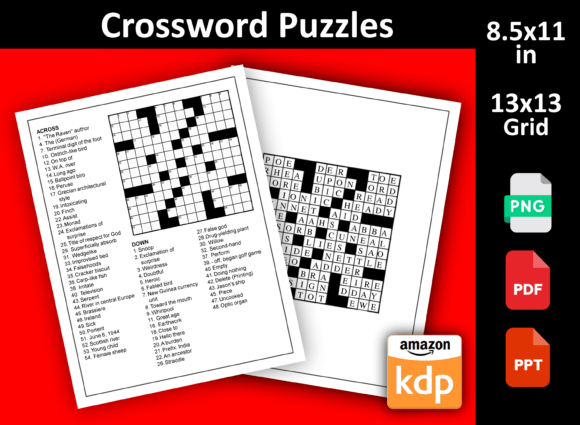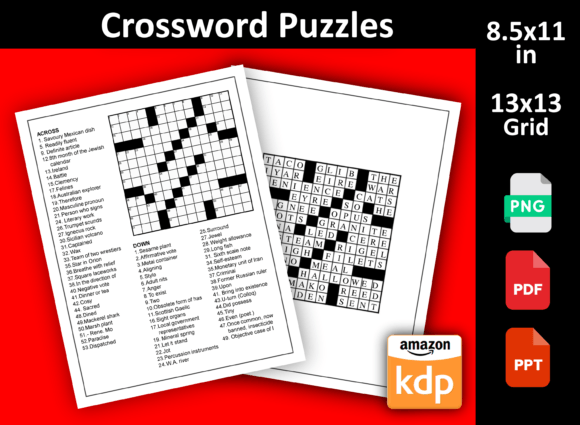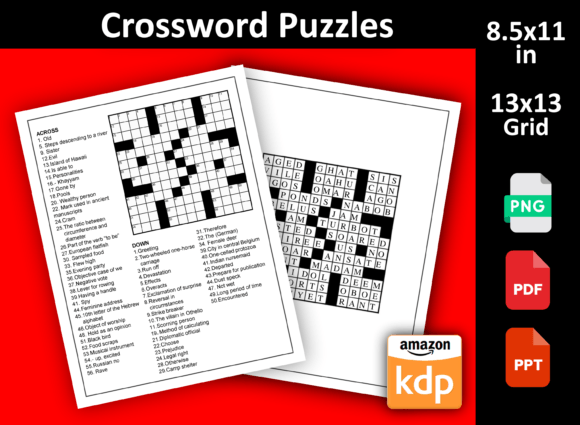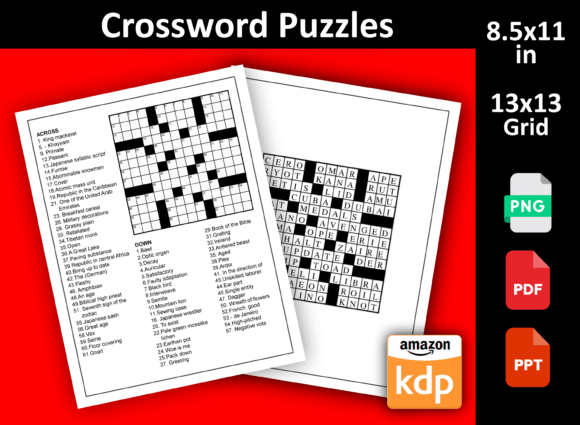
Why Crossword Puzzle Books Are a Smart Way to Earn on Amazon KDP
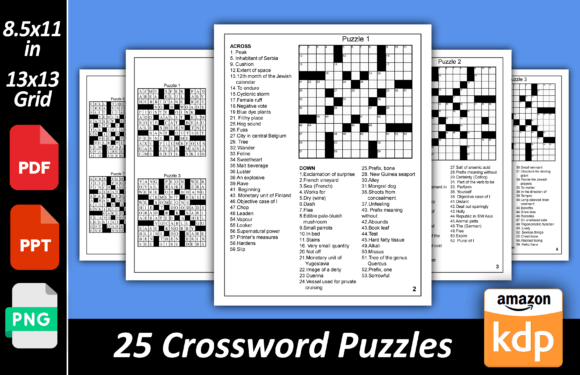
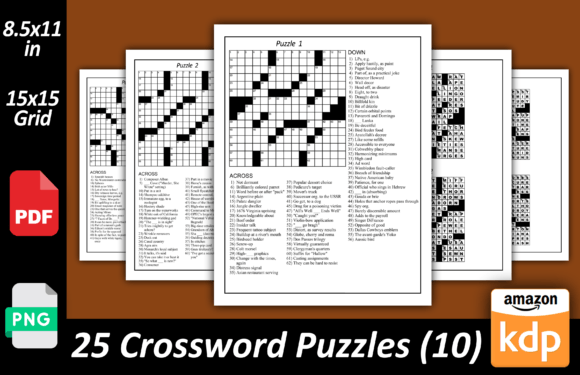
Crossword puzzles have been a beloved pastime for generations. They appear in newspapers, magazines, apps, and—perhaps most enduringly—in printed puzzle books. Whether you are a lifelong fan of word games or a newcomer looking for a creative side hustle, the world of crossword puzzle publishing offers an accessible and profitable opportunity. This article explores why crossword puzzle books remain incredibly popular among both kids and adults, and how you can use a carefully designed interior—like one featuring 25 crossword puzzles on an 8.5 x 11 inch layout with no bleed—to start making money on Amazon KDP.
We will cover everything from the enduring appeal of crosswords to the practical steps of formatting, publishing, and marketing your own unique puzzle book. By the end, you will understand how a simple collection of 15×15 grid, American-style crosswords at an intermediate and hard level can become a profitable product that stands out in a competitive marketplace.
The Timeless Appeal of Crossword Puzzles
Crossword puzzles engage the brain in a way few other activities can. They test vocabulary, general knowledge, pattern recognition, and logical thinking. For many, solving a crossword is a daily ritual—a quiet moment of mental exercise that brings satisfaction and a sense of accomplishment. This universal appeal spans age groups, from young students building their vocabulary to seniors keeping their minds sharp.
What makes crossword puzzles especially attractive for Amazon KDP publishers is their evergreen demand. Unlike trendy topics that fade, crossword puzzles have remained consistently popular for over a century. People buy them:
- For personal enjoyment during commutes, vacations, or quiet evenings at home.
- As gifts for word-loving friends and family members.
- For educational purposes in classrooms, homeschool settings, and tutoring programs.
- For cognitive fitness as a fun way to maintain mental agility.
This broad and stable demand means that a well-crafted crossword puzzle book can sell steadily month after month, often with little ongoing effort after the initial setup.
Why 25 Puzzles? The Power of a Focused Collection
You might wonder: why create a book with exactly 25 crossword puzzles rather than 50, 100, or more? There are several strategic reasons for this choice. A 25-puzzle book is short enough to feel approachable for both new and experienced solvers. It does not overwhelm the buyer, yet it provides enough content to offer hours of entertainment. For the publisher, a shorter book means lower production costs, faster creation time, and the ability to test the market quickly.
Moreover, a book with 25 puzzles fits naturally into a series. You can create Volume 1, Volume 2, Volume 3, and so on, each with a fresh set of puzzles. This encourages repeat purchases from satisfied customers who want more of the same quality experience. The 8.5 x 11 inch trim size is ideal for puzzle books because it provides plenty of space for large, readable grids and answer keys. The no bleed setting ensures the puzzles print cleanly without content getting cut off near the edges.
Understanding the Audience: Kids and Adults Alike
Crossword puzzle books have a remarkably wide audience. Kids enjoy them as a fun way to learn new words, practice spelling, and develop problem-solving skills. Adults appreciate the mental challenge and the nostalgic pleasure of working through a printed grid. By offering puzzles at an intermediate and hard level, you cater to solvers who want more than just simple clues. These are people who enjoy a genuine challenge and are willing to pay for a book that tests their abilities.
The 15×15 grid size is a classic choice for intermediate and hard puzzles. It is large enough to allow interesting word intersections and complex themes, yet not so large that it becomes intimidating. American-style crosswords typically have a symmetrical grid with black squares arranged in a balanced pattern, and they rely on a mix of common and obscure words, along with clever cluing. This style has a loyal following among solvers who appreciate its conventions.
The Technical Side: Creating Your Crossword Puzzle Interior
When you prepare a crossword puzzle book for Amazon KDP, the interior file is just as important as the cover. A well-designed interior ensures a positive user experience and reduces the risk of negative reviews. Here are the key elements you need to get right:
Grid Design and Clarity
Each puzzle should use a clean, easy-to-read 15×15 grid. The numbers for across and down clues should be clearly visible, and the grid lines should be sharp. White backgrounds with black text and grid lines are the standard for readability. Avoid decorative elements that might distract from the puzzle itself.
Clue Formatting
Clues should be organized into two columns: Across and Down. Number them sequentially, and ensure that each clue corresponds correctly to its grid location. Use a consistent font size (typically 10–12 pt) that is large enough to read without strain.
Solutions Section
Include a solutions section at the end of the book. This is essential for solvers who get stuck and want to check their answers. The solutions should show the completed grid with all letters filled in. Many readers appreciate having the answers in the same book rather than having to search online.
File Formats: PDF and PNG
Amazon KDP accepts interiors in PDF format, but having a PNG version of each page can be useful for previews, marketing materials, or other platforms. A zip file containing both formats gives you flexibility and ensures you always have a backup. Make sure your PDF is properly formatted with no bleed (that is, no content extends beyond the trim edge) to avoid printing issues.
How to Make Your Crossword Book Stand Out
With thousands of puzzle books on Amazon, differentiation is key. The product described here includes a unique design, but you can take additional steps to make your book stand out:
- Mix and match with another volume of crosswords to create a larger collection. For example, combine 25 puzzles from Volume 1 with 25 from Volume 2 to make a 50-puzzle book.
- Add a theme to your puzzles, such as movies, history, science, or pop culture. Themed puzzles attract niche audiences who are passionate about a specific topic.
- Offer varying difficulty levels within the same book. You could include 10 easy, 10 intermediate, and 5 hard puzzles to appeal to a broader range of solvers.
- Create a series with a consistent cover design and branding. Customers who enjoy one book will look for the next volume.
- Write original and clever clues that challenge solvers without being unfair. Good cluing is an art that keeps people coming back for more.
Remember that your book’s unique design is a selling point. Emphasize it in your product description by mentioning the grid size, difficulty level, number of puzzles, and the fact that it is an American-style crossword with a classic layout.
Publishing and Marketing on Amazon KDP
Once your interior and cover are ready, publishing on Amazon KDP is straightforward. You upload your manuscript, set a price, and choose royalty options. For puzzle books, a price between $5.99 and $9.99 is common, depending on the length and perceived value. KDP offers both 35% and 70% royalty options, but the 70% option requires your book to be priced within a certain range and meet other criteria.
Optimizing Your Book Description
Your product description should clearly communicate what the buyer gets. Use bullet points to list key features:
- 25 original crossword puzzles with 15×15 grids
- Intermediate to hard difficulty levels
- American-style crossword format
- Complete solutions included
- Large 8.5 x 11 inch pages with no bleed
- High-quality PDF and PNG files
Include relevant keywords naturally, such as “crossword puzzle book,” “hard crosswords for adults,” “intermediate crossword puzzles,” and “puzzle book for seniors.”
Marketing Strategies
To drive sales, consider these approaches:
- Amazon Ads: Run sponsored product ads targeting keywords like “crossword puzzle book” or “hard crossword puzzles.”
- Social media: Share sample puzzles on platforms like Pinterest, Instagram, or Facebook groups dedicated to puzzles and word games.
- Email list: Build a small list of interested solvers and offer a free sample puzzle to attract subscribers.
- Reviews: Encourage buyers to leave honest reviews. A book with 10+ positive reviews builds trust and improves visibility.
Common Misunderstandings About Puzzle Book Publishing
Many newcomers assume that creating a crossword book is simply a matter of filling grids with words. In reality, a great puzzle book requires thoughtful design, accurate cluing, and careful formatting. Another common misunderstanding is that you need to be a professional puzzle constructor to succeed. While expert-level puzzles have their place, there is a strong market for well-crafted intermediate and hard puzzles that are accessible to a wide audience. You do not need to be a crossword genius—you need to be a careful publisher who delivers a quality product.
It is also a mistake to think that the market is too saturated. Quality, originality, and good presentation still win. A book with 25 uniquely designed puzzles and a clean layout will find its audience, especially if you target a specific niche or difficulty level.
Practical Tips for Beginners
If you are new to KDP publishing, start small. A 25-puzzle book is a perfect first project. Here is a step-by-step approach:
- Create or source your puzzles. You can use crossword construction software or hire a freelancer to create original puzzles for you.
- Format the interior using a tool like Canva, Adobe InDesign, or even Microsoft Word with careful layout settings. Ensure the no-bleed specification is correct.
- Design a cover that looks professional and hints at the puzzle style inside. Avoid cluttered designs; simplicity often sells better.
- Upload to KDP and follow the platform’s guidelines for interior and cover files.
- Set a competitive price and choose the 70% royalty option if eligible.
- Launch with a promotion if possible, such as a discounted price for the first week.
The Bigger Picture: Puzzles in Modern Life
In an age of constant digital stimulation, printed puzzle books offer a welcome break. They encourage focused, screen-free time that many people crave. Crossword books are also popular in waiting rooms, on airplanes, and during quiet evenings at home. For educators, they serve as a fun teaching tool that builds vocabulary and critical thinking. For seniors, they provide a socially engaging activity that supports cognitive health.
By publishing a crossword puzzle book, you are not just selling a product—you are providing a tool for relaxation, learning, and mental fitness. This sense of purpose can make the work feel meaningful, even as you earn passive income through Amazon KDP.
Final Thoughts
Crossword puzzle books remain a staple of the publishing world because they combine entertainment, education, and mental challenge in a single, portable format. With a well-designed interior featuring 25 puzzles in a 15×15 grid, intermediate to hard difficulty, and a clean 8.5 x 11 inch layout with no bleed, you can create a product that appeals to both kids and adults. The included solutions add convenience, and the PDF and PNG formats in a zip file give you flexibility for publishing and promotion.
Whether you are looking for a creative side project, a way to earn extra income, or a stepping stone into the world of self-publishing, a crossword puzzle book is a smart and enjoyable choice. Start with 25 puzzles, learn the process, and then expand into a series. With attention to quality and a clear understanding of your audience, you can build a small but profitable catalog of puzzle books that continue to sell for years to come.
So grab your coffee, sharpen your pencil, and start building your crossword puzzle book today. The market is waiting—and so are the solvers.