Jigsaw Sudoku: A Practical Guide to Choosing, Solving, and Creating with Confidence
If you are comfortable with standard Sudoku, Jigsaw Sudoku will feel like a refreshing mental reset. The familiar 3x3 boxes are gone, replaced by irregular, jagged regions that curve across the grid in unpredictable ways. For adults juggling careers, side projects, and constant digital distractions, this variation offers a uniquely satisfying cognitive workout. It improves concentration and forces flexible thinking in a way the standard grid sometimes cannot.
But here is the challenge. Whether you are solving for personal enjoyment, planning to create a digital product, or using puzzles in an educational setting, the wrong approach can turn an elegant logic puzzle into a frustrating mess. Common mistakes range from choosing the wrong file format to misunderstanding the core logic. This article walks through those pitfalls and shows you a smarter, more efficient way to engage with Jigsaw Sudoku.
Why Jigsaw Sudoku Is Different from What You Expect
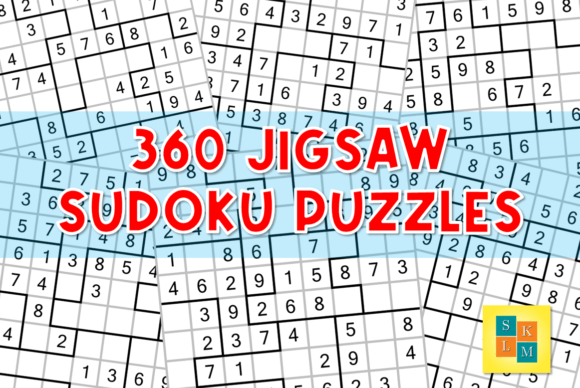
Standard Sudoku relies heavily on the predictability of the 3x3 box. Your brain quickly identifies patterns within those neat squares. Jigsaw Sudoku removes that crutch. The irregular regions, often shaped like snakes or geometric blobs, mean you cannot fall back on box-dependent scanning. You must rely solely on row, column, and region constraints.
This shift is what makes it so beneficial for adults aged 20 to 50. It pushes your brain to form new neural pathways. It improves your ability to hold multiple constraints in working memory. But it also means that old solving habits will slow you down. Many beginners pick up a Jigsaw puzzle and feel immediately overwhelmed because they try to apply box logic. Recognizing this difference early is the key to enjoying the puzzle rather than resenting it.
Common Pitfalls When Choosing or Using Jigsaw Sudoku Puzzles
I have worked with puzzle collections for years, both as a solver and as a content creator. The feedback I hear most often centers on a few recurring mistakes. These mistakes affect everything from how quickly you solve to whether you can use the puzzles effectively in a business or classroom context.
Mistake 1: Confusing Standard Sudoku Strategy with Jigsaw Logic
This is the most common intellectual mistake. You sit down with a Jigsaw Sudoku puzzle and immediately start looking for numbers that fit in the 3x3 box pattern. But there is no 3x3 box. The regions might cover six cells in one row and three in the next. Your standard scanning technique fails.
How it affects you: You get stuck early. You feel like the puzzle is unfair or poorly designed. This leads to frustration and abandoning the puzzle entirely.
A better approach: Start by scanning rows and columns for high-frequency numbers. Then, look at the irregular regions themselves. Ask yourself, “Which numbers are missing from this entire shape?” Count the cells. A region with nine cells must contain every digit exactly once. Treat each region like a unique container. This shift in perspective transforms the puzzle from confusing to deeply rewarding.
Mistake 2: Ignoring File Format and Resolution (Why SVG Matters)
This mistake is especially common among creators, entrepreneurs, and bloggers. You find a puzzle online, download a low-resolution JPEG, and try to use it in a printable or digital product. The result is blurry edges, pixelated numbers, and a product that looks unprofessional.
How it affects you: Low resolution kills print quality. If you are selling puzzle books or posting images on social media, poor graphics damage your credibility. Customers notice fuzzy lines immediately.
A better approach: Always look for collections that include SVG files. SVG is a vector format that scales to any size without losing quality. A 360-puzzle collection that provides SVG files gives you the freedom to resize, edit colors, and add your own branding without degrading the image. High-resolution PNG files (300 DPI) are also excellent for quick printing or digital publishing. Before you download or buy, check the format list. If it only offers low-res JPEGs, walk away.
Mistake 3: Skipping the Solutions
Some people think solutions are just for cheating. That is a misunderstanding. Solutions are verification tools and learning aids. When you are stuck on a difficult Jigsaw Sudoku, having the solution lets you trace the logic backward.
How it affects you: Without solutions, you might spend twenty minutes stuck on a single grid, unsure if you made an error ten moves back. This erodes confidence and wastes time. For educators, missing solutions means you cannot quickly check student work or provide answer keys.
A better approach: Only use puzzle collections that include complete solution sets. A well-structured collection will have a matching solution for every puzzle. This allows you to verify your work, learn from mistakes, and maintain momentum. It turns a single puzzle session into a productive learning experience.
Mistake 4: Underestimating the Value of Gradual Difficulty
Jumping straight into hard Jigsaw Sudoku puzzles is a recipe for burnout. The irregular regions add a layer of complexity that takes time to internalize. Many collections dump all puzzles at a single difficulty level or fail to label them correctly.
How it affects you: Beginners feel defeated. Experts feel bored. You miss the satisfying arc of improvement that comes from progressing through easy, medium, and hard puzzles.
A better approach: Look for a curated collection with a clear difficulty progression. A set of 360 puzzles organized from easy to hard lets you build skills methodically. Easy puzzles help you understand the region dynamics. Medium puzzles challenge your scanning speed. Hard puzzles refine your advanced deduction skills. This structured progression keeps the activity engaging and prevents plateaus.
Mistake 5: Failing to Repurpose the Puzzles for Creative or Business Use
Entrepreneurs, bloggers, and small business owners often buy puzzle packs without thinking about how the files will integrate into their workflow. You might buy a standard PDF, but then realize you need a PNG for your website, an SVG for a branded workbook, and a cover image for your product listing. Buying separate assets for each need is expensive and inefficient.
How it affects you: You waste time reformatting files or settling for lower-quality outputs. Your product looks disjointed. Your profit margins shrink because you are spending hours on formatting instead of creating value.
A better approach: Choose a comprehensive collection that includes SVG, PNG, and PDF formats, plus a ready-made cover. A set that provides 360 puzzles in multiple formats lets you use the same content across different platforms seamlessly. Use the SVG files for custom branding. Use the PNG files for instant social media posts. Upload the PDF directly for print-on-demand platforms. The included cover image saves you hours of design work.
Practical Advice for Different Audiences
To get the most out of a Jigsaw Sudoku collection, you need to match the tool to your specific role.
For the Personal Solver
Print the PDF at home on good-quality paper. Use a pencil and a soft eraser. Do not rush. Start with the easy puzzles and focus on understanding the unique shape logic. Keep a notebook where you track solving time for each puzzle. You will see steady improvement in your concentration and speed.
For the Entrepreneur or Content Creator
Open the SVG files in your preferred design software. Add your logo, change the color palette to match your brand, and export custom versions for your products. The PNG files are perfect for creating puzzle-of-the-day posts on social media. The included PowerPoint cover lets you launch a product quickly without hiring a designer. A single well-prepared collection becomes a reusable asset library.
For the Educator or Homeschooler
Project the high-resolution PNG files on a screen for group solving sessions. The irregular regions are excellent for teaching flexible thinking and problem-solving frameworks. Print individual copies for students who finish early. Having the solutions allows you to quickly verify work and provide targeted help.
What to Check Before You Buy or Download
Before you commit to any Jigsaw Sudoku collection, run through this quick checklist. It saves time, money, and frustration.
- Format completeness: Does it include SVG, PNG, and PDF? Do not settle for one format if you need flexibility.
- Resolution: Are the PNG files at least 300 DPI? This ensures crisp printing.
- Solution accuracy: Are solutions provided for every single puzzle? Yes or no. No partial sets.
- Difficulty range: Is there a clear progression from easy to hard? Graded sets offer more long-term value.
- Usability extras: Does the pack include a cover image or a ready-to-upload PDF? For creators, these extras save hours of production time.
Making the Right Choice for Your Needs
Jigsaw Sudoku is a brilliant logic puzzle that rewards careful thinking and patience. But the experience is only as good as the tools you use. By avoiding common mistakes like ignoring file formats, skipping solutions, or jumping into hard puzzles too quickly, you set yourself up for a much more satisfying experience.
A well-prepared collection—one with high-quality SVG and PNG files, a clear difficulty progression, and complete solutions—gives you everything you need to enjoy the puzzles yourself or share them with an audience. Approach your next puzzle with the right strategy, and you will find that Jigsaw Sudoku sharpens your mind in ways the standard grid simply cannot match.