Mastering Financial Clarity with a Checking Account Ledger Logbook
In an era dominated by digital banking apps, automatic transaction syncing, and real-time balance alerts, one might assume that the humble checking account ledger logbook has become obsolete. Yet, for a growing number of professionals, creators, small business owners, and even hobbyists, the opposite is true. The physical act of recording debits, credits, and balances by hand offers a level of financial awareness that no push notification can replicate. A well-designed Checking Account Ledger Logbook is not merely a relic of bookkeeping history—it is a deliberate tool for building accountability, catching errors before they snowball, and maintaining a clear snapshot of cash flow without relying entirely on a screen.
This article explores the real-world relevance of a checking account ledger logbook, its structural advantages over purely digital tracking, and why the Checking Account Ledger logbook – KDP Interior Design has become a sought-after resource for content creators and end users alike. We will walk through practical workflows, examine the specific file specifications that make an interior upload-ready, and consider how different audiences can integrate such a logbook into their daily routines.
Why a Physical Ledger Still Matters in a Digital World
Every financial expert will remind you that tracking your transactions is the foundation of sound money management. But there is a subtle difference between passively viewing a list of cleared transactions on a banking portal and actively writing each entry into a Checking Account Ledger Logbook. The manual process forces you to engage with every dollar that moves through your account. You see the running balance change in real time as you write, which builds a mental connection to your spending patterns that digital tools often fail to provide.
Consider a freelancer who receives multiple small payments throughout the month. Without a ledger, it is easy to overlook a missing deposit or a duplicate charge until the bank statement arrives weeks later. With a logbook, the discrepancy becomes apparent the moment you try to reconcile the entry. This proactive detection of errors is one of the strongest arguments for maintaining a physical record alongside your digital accounts.
Unpacking the KDP Interior Design for a Checking Account Ledger Logbook
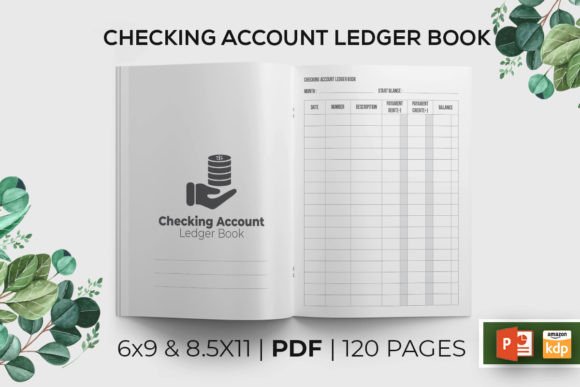
For content creators, self-publishers, and educators, the Checking Account Ledger logbook – KDP Interior Design Download represents a ready-to-use product that can be uploaded directly to Amazon Kindle Direct Publishing. The interior file is the heart of any low-content or medium-content book, and a well-constructed ledger interior must balance usability with visual clarity. The exclusive download package includes everything needed to produce a professional-grade logbook without starting from scratch.
What the Interior Includes: A Breakdown of the File Specifications
- Ready-to-Upload PDF File — The interior is formatted as a single PDF that passes Amazon KDP's upload requirements. No additional editing or conversion is needed before publishing.
- Two Trim Sizes Provided — Both 6 x 9 inches and 8.5 x 11 inches are included. The 6x9 size is ideal for a portable, notebook-style logbook that can slip into a bag, while the 8.5x11 format offers larger entry fields for those who prefer more writing space.
- 120 Total Pages — This page count provides enough entries to cover several months of regular checking account activity without being so bulky that the book feels wasteful. It strikes a practical balance between longevity and usability.
- Intro Page — A dedicated introductory page helps users understand how to use the logbook, what columns mean, and how to reconcile their checking account. This is especially valuable for buyers who may be new to manual bookkeeping.
- KDP Tested for Quality — The interior has been tested on Amazon KDP to ensure that margins, bleeds, and trim lines conform to Amazon's specifications. The note "Interior is without bleed" confirms that the content stays within safe printable boundaries, preventing text or lines from being cut off during production.
These specifications matter because a poorly formatted interior leads to returns, negative reviews, and rejection by KDP's automated checks. By using a pre-tested design, creators can focus on marketing and distribution rather than troubleshooting layout issues.
Practical Applications Across Different Audiences
A checking account ledger logbook is not a one-size-fits-all tool. Different users will engage with it in different ways, and understanding these use cases helps both creators and end users maximize its value.
For Small Business Owners and Freelancers
Business owners who manage multiple income streams often struggle to separate personal transactions from business expenses. A dedicated Checking Account Ledger Logbook for a business checking account allows them to track every client payment, supply purchase, and tax-deductible expense in one place. When tax season arrives, having a handwritten ledger alongside digital records simplifies the process of verifying deductions and reconciling statements. Freelancers, in particular, benefit from the habit of recording each invoice payment as it clears, which reduces the risk of double-counting income or forgetting to follow up on outstanding payments.
For Educators and Hobbyists Teaching Financial Literacy
Teachers and workshop leaders who cover personal finance often look for tangible tools to demonstrate basic bookkeeping concepts. A logbook serves as an excellent hands-on exercise for students learning to track income and expenses. By using a Checking Account Ledger logbook – KDP Interior as a classroom resource, educators can show students how to structure entries, calculate running balances, and identify errors. The physical format removes the abstraction of spreadsheets and makes the learning process more intuitive.
For Individuals Rebuilding Financial Habits
People recovering from overspending or working to build an emergency fund often find that digital banking apps make it too easy to ignore the reality of their balance. A manual ledger introduces friction—but in a good way. Each entry requires a moment of reflection. Over time, this practice builds a mindful relationship with money. The act of writing a withdrawal and watching the balance drop can be a powerful deterrent against impulse purchases.
Advantages of Using a KDP-Ready Ledger Interior
From the perspective of a creator or publisher, the decision to use a pre-designed interior rather than building one from scratch comes with several clear advantages.
- Time Savings — Designing a ledger grid that aligns perfectly across 120 pages, with consistent column widths, headers, and page numbers, is tedious work. An exclusive downloadable interior eliminates this labor entirely.
- Print-Ready Reliability — The interior has been tested on Amazon KDP to ensure that the final printed product meets Amazon's quality standards. This reduces the likelihood of rejection or customer complaints about misaligned entries.
- Flexible Formatting — With both 6x9 and 8.5x11 options, publishers can offer the same logbook in two sizes, appealing to different customer preferences without maintaining separate design files.
- Clean, Professional Appearance — A well-designed interior enhances the perceived value of the product. Buyers are more likely to leave positive reviews and recommend the logbook to others when the layout is clear and easy to use.
How to Integrate a Checking Account Ledger Logbook into a Daily Workflow
Simply owning a logbook is not enough; the real benefit comes from using it consistently. Here is a practical workflow that anyone can adopt, whether they are a business owner, a student, or someone managing a household budget.
Step 1: Set Up the Columns
Most ledger logbooks include columns for date, description, check number (if applicable), debit amount, credit amount, and balance. Before making any entries, fill in the opening balance at the top of the first page. This starting point should match your bank statement as of a specific date.
Step 2: Record Transactions Daily or Weekly
The ideal frequency depends on how many transactions you process. For high-volume accounts, daily entry prevents the pile-up from becoming overwhelming. For simpler accounts, a weekly session of 10 to 15 minutes is usually sufficient. The key is consistency—skipping two weeks makes reconciliation much harder.
Step 3: Reconcile Against Bank Statements
At the end of each month, compare your ledger entries against your bank statement. Mark off transactions that match. Any discrepancy should be investigated immediately. Common sources of mismatch include forgotten automatic payments, bank fees, or data entry errors. The Checking Account Ledger Logbook makes this process straightforward because all your records are in one place.
Step 4: Use the Intro Page as a Reference
The intro page included in the KDP interior design provides guidance on how to handle common situations, such as entering pending transactions or recording interest earned. Refer back to this page whenever you encounter an edge case.
Observations on Design and Usability
Not all ledger interiors are created equal. A common frustration among users is cramped entry fields that leave no room for writing legibly. The 8.5 x 11 inch version of the Checking Account Ledger logbook – KDP Interior addresses this by providing generous spacing. For users who prefer portability, the 6 x 9 inch version is compact without sacrificing readability. The inclusion of 120 pages means the book will last several months for most users, and the lack of bleed ensures that entries near the spine remain fully visible after binding.
From a publisher's perspective, the "without bleed" specification is critical. Books with bleed require additional margin adjustments and may incur higher printing costs. By using a no-bleed interior, creators can offer a lower-priced product while maintaining print quality.
Considerations When Choosing or Creating a Ledger Logbook
Whether you are a buyer looking for a personal logbook or a creator preparing a KDP listing, there are a few factors to weigh before committing to a specific design.
- Paper Quality in Print — The interior PDF defines the layout, but the final user experience also depends on the paper chosen during printing. Cream paper reduces glare and is easier on the eyes, while white paper provides higher contrast. KDP offers both options.
- Binding Type — A paperback logbook with a flexible cover is the most common choice. For a premium feel, some publishers opt for a glossy cover. The interior design remains the same regardless of cover finish.
- Entry Density — Some users prefer a logbook with fewer entries per page and more lines for notes. Others want maximum efficiency with many rows per page. The standard design in this interior balances both needs, but it is worth considering your target audience's preference.
- Durability — A logbook used in a work environment may need a sturdier cover. While the interior design does not affect cover strength, publishers can select a heavier cover stock during setup.
Real-World Relevance for Content Creators
For anyone building a niche publishing business on KDP, the financial tracking and organizer category is consistently popular. A Checking Account Ledger Logbook fits neatly into this niche, and the availability of a tested, exclusive interior design removes the biggest barrier to entry. Creators do not need to learn graphic design software or worry about meeting KDP's technical requirements. They can upload the PDF, set a price, and start selling.
The demand for such logbooks is steady because financial organization is a universal need. Over time, customers who purchase a ledger logbook may return for related products—expense trackers, bill organizers, or budget planners. A single high-quality interior can become the foundation of a broader product line.
Final Observations on the Checking Account Ledger Logbook Ecosystem
The physical ledger is experiencing a quiet renaissance, driven by people who value intentionality over convenience. The Checking Account Ledger Logbook, especially when delivered as a clean, KDP-ready interior, serves both the end user who wants to regain control of their finances and the creator who wants to publish a useful product without excessive overhead. By combining thoughtful design with practical specifications—two trim sizes, 120 pages, an intro page, and tested print readiness—this interior offers a turnkey solution for anyone looking to enter the low-content publishing space or simply improve their own financial tracking habits.
Whether you are recording invoice payments for your freelance business, teaching a classroom of students how to balance a checkbook, or simply trying to build a clearer picture of where your money goes each month, a checking account ledger logbook remains one of the most reliable tools available. And with an exclusive KDP interior design ready for immediate download, the path from concept to finished product has never been more direct.