Daily Habit Tracker Logbook KDP Interior Guide
Building a publishing business on Amazon KDP requires more than just a good idea. You need assets that are ready to use, easy to customize, and appealing to buyers. One such asset is the Daily Habit Tracker Logbook KDP Interior. This package provides a complete interior design for a habit tracker logbook, aimed at helping you produce a print-ready paperback without starting from scratch. But is it right for you and your audience? Let’s look at what it actually includes, who benefits from it, and how to decide if it matches your goals.
What the Daily Habit Tracker Logbook KDP Interior Offers
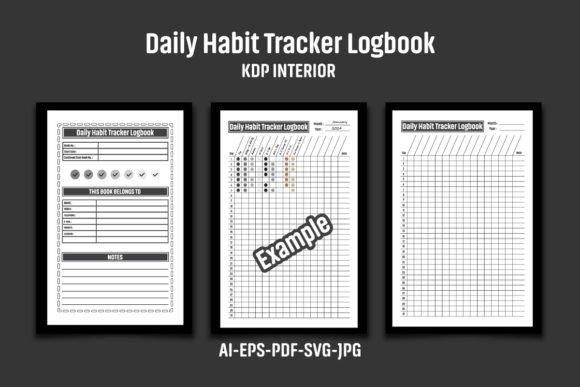
At its core, this interior is a set of digital files that form the inside pages of a habit tracker book. The package contains one AI file, one EPS file, one PDF file, three JPG files, and one SVG file. The PDF is the primary print-ready file, while the AI, EPS, and SVG files give you room to edit and customize. The interior is sized at 6 inches by 9 inches with bleed, meaning the overall dimensions are 6.12 by 9.25 inches, which is standard for many paperbacks. It has 110 pages, all in black and white with 300 DPI resolution, and the files are based on Illustrator AI and EPS CS6 versions. You will need to extract everything from a ZIP file and then add your own logo or graphic to the interior pages before uploading to KDP. This helps avoid duplicate content flags and ensures your version is unique.
For anyone building a KDP publishing business, this interior saves time. Instead of designing each page layout from scratch, you receive a structured template that you can adjust. The black and white format keeps printing costs low, and the high resolution ensures clean, sharp lines. Because the interior is editable, you can change colors, add branding elements, or modify the layout to suit your specific vision. The 110-page count gives enough room to offer a substantial product without feeling too slim or overly long.
Why Different Audiences Care About This Interior
Different people look at this interior with different priorities. A beginner publisher may care most about ease of use and low upfront effort. An experienced creator might focus on flexibility and customization options. A small business owner or entrepreneur may evaluate the commercial potential. Let’s explore how various groups can approach this product.
Beginners and New KDP Publishers
If you are just starting with KDP, the main challenge is creating a product that looks professional without investing too much time or money. The Daily Habit Tracker Logbook KDP Interior is a practical entry point. You get a ready-made layout that follows print standards, and you only need to add your branding. The included PDF file can be used directly after customizing the cover and adding your logo. Beginners often worry about technical details like bleed, margins, and resolution. This interior handles those basics, so you can focus on your cover design and listing. The 110-page count is also beginner friendly. It is long enough to feel valuable but short enough to keep printing costs manageable. If your goal is to test the market or build a small catalog quickly, this interior gives you a solid starting point.
Experienced Creators and Designers
Seasoned publishers may want more control. The AI and EPS files allow deep editing in Adobe Illustrator or similar software. You can change the habit tracker layout, adjust spacing, add extra pages, or incorporate your own graphics. The SVG file gives additional flexibility for web-based or design workflows. Experienced users often look for speed and reliability. With files already at 300 DPI and with bleed, you skip the time-consuming setup and go straight to refinement. If you plan to create a series of planners or journals, this interior can serve as a base template that you modify for different niches. The ability to change black-and-white elements to colored or shaded versions lets you adapt the interior for different target audiences. For creators who value long-term usefulness, having editable vector files means you can reuse and evolve the design over many projects.
Entrepreneurs and Small Business Owners
If you run a small publishing business, time is money. The Daily Habit Tracker Logbook KDP Interior helps you produce a new SKU quickly. The commercial value lies in its adaptability. You can brand it with your logo, adjust the interior for different niches (fitness, reading, mindfulness, productivity), and publish under various pen names or imprints. Because the interior is black and white, your per-unit printing cost stays low, which improves profit margins. Entrepreneurs often care about speed to market. Having the files in multiple formats means you can work on them immediately without hunting for compatible software. The ZIP package is easy to store and organize. For someone managing multiple titles, this interior is one tool among many that helps maintain a consistent output.
Educators and Hobbyists
Educators may use habit trackers as part of curriculum or personal development courses. Having an editable interior allows you to customize prompts, add classroom-specific sections, or adjust the page count for different age groups. Hobbyists who enjoy journaling, bullet journaling, or personal growth may also find value. If you are not planning to publish but want to create a personalized habit tracker for yourself, the editable files let you build exactly what you need. The learning value is also present. Working with AI, EPS, and SVG files helps you gain practical design skills. Even if you do not publish, exploring the interior teaches you about page layout, bleed, and print resolution.
Key Priorities: Ease of Use, Cost, Quality, and Flexibility
When you evaluate this interior, several factors come into play. Understanding how each priority matters to different users helps you decide if it fits your needs.
Ease of Use
For many, ease of use is the top concern. The interior arrives as a set of files inside a ZIP archive. You need to extract them with tools like WinZIP or WinRAR. Once extracted, the PDF is the simplest option. You can open it, add your logo to the first or interior pages using any PDF editor or design software, and then upload to KDP. The AI and EPS files require design software such as Adobe Illustrator but offer more control. If you have never used vector editing tools, the PDF route is straightforward. Beginners appreciate that they do not need to learn complex design skills to produce a usable book. More advanced users can dive into the AI file and customize every element. The interior is designed to be easy to color change, meaning you can quickly switch the look without reworking the entire layout.
Cost Considerations
Cost affects both you and your future customers. The black and white interior keeps your author copies and customer purchases affordable. For a 110-page 6x9 book, printing costs stay low, which allows you to price competitively or keep a higher royalty. The interior itself is a one-time purchase. If you plan to publish multiple titles, consider whether you can modify the design for different niches. The editable files allow you to reuse the same base structure, which reduces your per-title cost over time. For a beginner, this is a low-cost way to launch your first product. For an experienced publisher, it is a cost-effective addition to a larger catalog.
Quality and Presentation
Quality matters for customer satisfaction. With 300 DPI resolution, the interior prints clearly. Black and white design ensures consistent reproduction across different printers. The bleed is already included, so you avoid content being cut off at the edges. These details matter because a poorly formatted interior leads to returns and negative reviews. The overall dimensions (6.12 x 9.25 inches) are standard, which reduces the chance of formatting errors during upload. The presentation inside your book affects customer perception. Clean, simple tracker pages with enough space for daily entries feel professional. Buyers expect a logbook to be functional and easy to use. The interior delivers that basic usability.
Flexibility and Customization
Flexibility determines how long the interior remains useful for you. The inclusion of AI, EPS, and SVG files means you can edit the design extensively. You can change fonts, adjust line spacing, add icons, modify the tracker layout, or insert your own motivational quotes. This is valuable if you want to create a branded product or target a specific audience. For example, if you focus on fitness trackers, you could adapt the interior to include workout checkboxes. If your niche is mindfulness, you could add gratitude sections. The ability to customize prevents your book from looking generic, which is important when many similar products exist on KDP. The SVG file also allows for web use or design integration outside of print, which can be useful if you create digital versions later.
Practical Examples for Different Reader Types
Let’s see how this interior works in real scenarios.
A beginner publisher named Maria wants to launch her first journal. She opens the PDF, adds her logo at the top of each page using Canva, and creates a cover using a separate tool. She uploads the interior and cover to KDP and publishes within a day. Her cost is low, and she learns the basic steps of book creation without needing advanced software.
An experienced designer named James receives the AI file. He opens it in Illustrator, changes the habit tracker layout from a weekly to a monthly format, adds his own font and color scheme, and expands the page count to 140 by duplicating sections. He creates a series of three different habit trackers using the same base file, which saves him hours of design time.
A small business owner named Priya runs an Etsy shop for digital planners. She uses the SVG file to create a digital version of the habit tracker, then sells it alongside her physical books. She also uses the interior to publish a paperback version on KDP, linking it back to her brand. The multiple file formats allow her to serve both print and digital customers.
A teacher named Alex wants to help students track reading habits. He modifies the EPS file to replace generic habit spaces with reading log categories. He prints copies for his class and later publishes a customized version for other educators. The interior becomes a tool for both personal use and commercial publishing.
Is This Interior Right for You?
Consider your current goals and skill level. If you are new to KDP and need a simple, low-risk way to publish, this interior provides a clear path. You do not need to design from scratch, and the black-and-white format keeps costs down. If you are an established publisher looking for a flexible template that you can adapt repeatedly, the vector files offer that capability. The interior is also suitable if you want to learn about book formatting without investing in expensive design resources.
However, if you need a full-color design or a specialty layout beyond what a standard habit tracker offers, you may need additional customization. The interior is designed for black and white, so color versions require editing. Also, if you prefer completely unique layouts that do not resemble other KDP books, you will add your own creative elements. The interior is a foundation, not a finished product. You still need to add your branding and possibly adjust the design to stand out.
The Daily Habit Tracker Logbook KDP Interior works best for those who value speed, cost efficiency, and customization potential. It supports a wide range of users from beginners to professionals, as long as you are willing to put in some effort to make it your own. By understanding the file formats, the print specifications, and the need to add your logo, you can avoid common pitfalls and produce a book that meets both your standards and customer expectations.
Before you start, make sure you have the software to open the files you intend to use. For PDF, almost any computer works. For AI and EPS, you need a vector editing program. The ZIP extraction is straightforward but requires a utility like WinRAR on Windows or the built-in archive tool on Mac. Once you extract the files, examine the interior pages to see how the tracker is laid out. Decide what changes you want to make, then edit and save your version. Finally, upload to KDP as a new title. With careful customization, this interior can become a reliable part of your publishing workflow.